
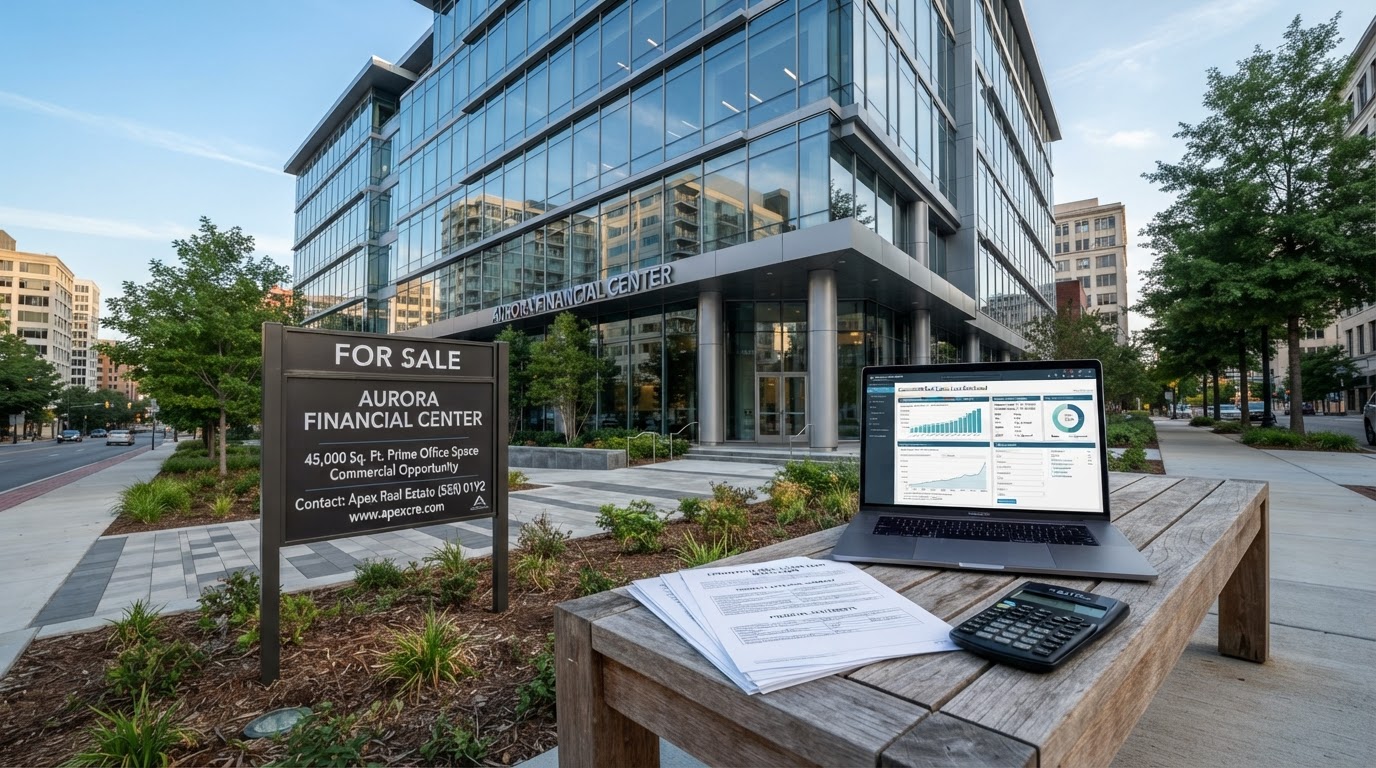
For many business owners, the largest single funding decision they will ever make is not about inventory, equipment, or payroll. It is about the building their business operates in. Buying your own commercial real estate can be the single best long-term investment a business makes — or one of the most expensive mistakes. At ASAP Capital Solutions, Damon and Ashley Boswell walk owners through this decision constantly, and the owners who make it well are the ones who understand both the financing and the strategy behind it before they sign.
In this guide, Damon and Ashley Boswell break down exactly how commercial real estate loans work, how the SBA 504 and SBA 7(a) programs compare to conventional financing, what the down payment and terms look like in 2026, and the strategic question that sits beneath all of it — whether buying your building serves your business better than leasing it.
What a Commercial Real Estate Loan Is
A commercial real estate loan is financing specifically for the purchase, construction, or refinancing of business property — an office building, a warehouse, a retail space, a medical clinic, an industrial facility, or the land beneath any of them. Unlike residential mortgages, which are typically amortized over thirty years, commercial real estate loans carry shorter terms, larger down payments, and a structure tailored to the property's use as a business asset. As Avana Capital notes, SBA 504 and SBA 7(a) loans together cover more than sixty percent of small business commercial real estate financing, with deal sizes typically running from five hundred thousand to five million dollars — a range that covers the vast majority of owner-occupied commercial property purchases.
Ashley Boswell describes the core appeal: a commercial real estate loan lets a business owner convert rent — a monthly expense that builds no equity and disappears at the end of the lease — into an ownership stake in an appreciating asset. The business pays a mortgage instead of rent, and each payment builds equity in a property the business owns. Damon Boswell adds that the property itself serves as collateral for the loan, which reduces the lender's risk and unlocks longer terms and lower rates than an unsecured business loan of the same size would command. That collateral structure is what makes commercial real estate financing one of the most cost-effective forms of business capital available — when the business is ready for it.
SBA 504 vs. SBA 7(a) vs. Conventional
Three loan programs dominate the commercial real estate market for small businesses, and understanding the differences is the first step in choosing. The SBA 504 loan is purpose-built for owner-occupied commercial real estate and heavy equipment, and as the SBA outlines, it provides long-term, fixed-rate financing of up to five million dollars for major fixed assets. As Growth Corp's 2026 guide explains, the 504 structure works in three parts: a conventional lender finances approximately fifty percent of the project cost through a first mortgage, the SBA's Certified Development Company finances approximately forty percent through the 504 loan, and the borrower contributes approximately ten percent as a down payment.
The SBA 7(a) loan, by contrast, is a more flexible program that can fund real estate but also working capital, equipment, business acquisition, and debt refinancing, up to five million dollars with terms up to twenty-five years for real estate. As the Growth Corp guide notes, 7(a) wins for business acquisitions, flexible business expenses, and shorter-term needs, while the 504 wins for pure commercial real estate purchases where the owner wants long-term fixed-rate stability and the lowest possible monthly payment. A conventional commercial loan, offered by a bank without the SBA guarantee, offers faster approval but typically a shorter term — often five to twenty years with a balloon payment — and often a larger down payment. Damon Boswell's guidance is direct: for an owner-occupied real estate purchase, the SBA 504 is almost always the lowest-cost, longest-term option. The 7(a) is the more flexible all-purpose tool. The conventional loan is the fastest. The right choice depends on the property, the timeline, and the business's full set of needs.
Down Payments and Terms in 2026
The down payment and term structure is where the SBA programs differentiate themselves most clearly from conventional financing. As Growth Corp outlines, the SBA 504 requires approximately ten percent equity from the borrower, with some projects requiring more depending on business history or property type. The 504 offers terms of ten, twenty, or twenty-five years for real estate acquisition, with the CDC portion carrying a fixed interest rate for the full term — a rate tied to U.S. Treasury debenture auctions and set at funding, not at application. As CDC New England notes, the 504's combination of ten percent down, fixed rates tied to Treasury markets, and terms up to twenty-five years for real estate is what makes it the most attractive commercial real estate product for qualifying small businesses.
Damon Boswell frames the value: a twenty-five-year term on a real estate loan produces a monthly payment that a five- or ten-year conventional loan simply cannot match. A $750,000 loan amortized over twenty-five years at a competitive fixed rate produces a manageable monthly payment that the same loan over ten years would not — the longer term is what makes ownership affordable for a business that could not absorb the shorter, higher payment. Ashley Boswell adds that the conventional alternative — a bank loan without the SBA guarantee — typically requires twenty to thirty percent down and runs five to twenty years, often with a balloon payment that refinances or pays off the balance at the end. The SBA's ten percent down and twenty-five-year term are not minor advantages. They are the difference between a business that can afford its building and one that cannot, and Damon and Ashley Boswell have seen that difference decide whether an owner buys or keeps leasing more times than they can count.
Buying vs. Leasing: The Strategic Question
Beneath every commercial real estate loan is a strategic question that Damon and Ashley Boswell spend more time on than any other: should the business buy its building or lease it? The answer is not universal, and it depends on the business's stage, its stability, its growth plans, and the local real estate market. The case for buying is ownership — each payment builds equity, the property appreciates over time, the business gains an asset it can sell, refinance, or lease to others, and the owner gains control over the space without a landlord's decisions about rent, renewal, or sale. The case for leasing is flexibility — lower upfront cost, no long-term commitment, the ability to move as the business grows or shrinks, and no responsibility for the property's maintenance, taxes, or market risk.
Damon Boswell's framework is clear. Buying wins when the business is stable, plans to stay in the location for seven or more years, has the down payment or can access it through financing, and operates in a market where property values are appreciating. Leasing wins when the business is growing rapidly and may outgrow the space, when the location is uncertain, when the down payment capital is needed elsewhere in the business, or when the local real estate market is flat or declining. Ashley Boswell adds the tax consideration: as an owner, the business can deduct mortgage interest and depreciation, while as a lessee it deducts the full rent — but only the owner builds equity. The decision is not just about the monthly payment. It is about whether the business wants to spend that payment on an asset it owns or an expense that disappears.
The Equity You Build
The most powerful argument for buying commercial real estate is the equity the business builds over time. A business that leases for twenty years owns nothing at the end of those payments. A business that pays a mortgage for twenty years owns a building — an asset that may have appreciated substantially, that the business can sell, refinance, or lease to another tenant, and that represents real, tangible net worth on the balance sheet. That equity is what separates the business that owns its future from the business that rents it.
Ashley Boswell walks owners through the long-term math. A business paying $8,000 a month in rent for twenty years spends nearly two million dollars and accumulates zero equity. A business paying a $8,000 mortgage for the same period owns a property that, even at modest appreciation, may be worth well more than the original purchase price — and the business has the option to sell that property, refinance it to extract the equity, or hold it as a rental when the business eventually moves or the owner retires. Damon Boswell adds that the equity also serves as collateral for future financing, giving the business borrowing power that a lessee will never have. The building is not just a place to operate. It is a financial asset that compounds over time, and that compounding is the reason buying, when the business is ready, is one of the most powerful long-term moves an owner can make.
Who Qualifies for Commercial Real Estate Financing
Qualification for a commercial real estate loan centers on the business's ability to service the debt and the property's value. For SBA 504 and 7(a) loans, the business must be owner-occupied — meaning the business must occupy at least fifty-one percent of the property for an existing building — and the business must be small under SBA size standards, for-profit, and unable to obtain equivalent credit on reasonable terms from a conventional lender. Conventional lenders review the business's credit, revenue, time in business, and the property's appraised value, and they typically require a loan-to-value ratio of seventy to eighty percent, meaning a twenty to thirty percent down payment.
Damon Boswell's preparation guidance is straightforward. Have three years of business and personal tax returns ready, a current profit and loss statement and balance sheet, a debt schedule listing existing obligations, a clear statement of how the property will be used, and a preliminary appraisal or property valuation. For an SBA loan, add the personal guarantee of any owner with twenty percent or more ownership, which is standard for both 504 and 7(a) programs. Ashley Boswell adds that the property's cash flow — either the rent the business pays itself or the rent from other tenants — is part of the underwriting, which is why a multi-tenant property that generates rental income can qualify for more financing than an owner-occupied single-tenant building. The property and the business are underwritten together, and the strength of both determines the terms.
The Total Cost: Rates, Fees, and What to Expect
The cost of a commercial real estate loan extends beyond the interest rate, and Damon and Ashley Boswell are careful to walk owners through every component. The SBA 504's CDC portion carries a fixed rate tied to Treasury auctions, set at funding, with terms of ten to twenty-five years for real estate. The first mortgage from the conventional lender carries its own rate, which may be fixed or variable. The SBA 7(a) carries a rate negotiated between the borrower and lender subject to SBA maximums, which keeps it competitive. Conventional loans carry market rates that depend on the borrower's credit and the property's profile. As NerdWallet's 2026 data shows, SBA loans run about ten to fifteen percent, while conventional commercial loans can vary more widely based on the lender and the deal.
Damon Boswell's guidance is to calculate the all-in cost. Beyond the rate, the SBA charges a guarantee fee on 7(a) loans — NerdWallet notes it runs from 0.25% to 3.75% based on the loan size — and the 504 program carries CDC and SBA fees that are financed into the loan. Conventional loans carry origination fees, appraisal costs, and closing costs. Ashley Boswell adds that despite the fees, the SBA programs almost always produce a lower total cost than a conventional loan for the same property, because the longer term and lower rate more than offset the upfront fees over the life of the loan. The owner must compare the total dollar cost — rate, fees, and total interest over the full term — to compare one loan against another honestly, and that comparison is what Damon and Ashley Boswell walk every buyer through before they commit.
The Risks of Ownership
Buying commercial real estate is not without risk, and Damon and Ashley Boswell are candid about every one. The first is the down payment capital — ten percent on a 504, twenty to thirty on a conventional loan — which is capital tied up in the property and unavailable for other uses in the business. The second is the long-term commitment — a twenty-five-year mortgage is a decades-long obligation, and if the business needs to move, shrink, or close, the property must be sold or leased, which takes time and may not happen at a favorable price. The third is the property's market risk — commercial real estate can decline in value, and a business that bought at a market peak may find itself underwater on the mortgage if it needs to sell during a downturn.
Damon Boswell's cautions are specific. Never buy a building the business cannot comfortably service from its current revenue, because the mortgage payment comes due every month whether the business is thriving or struggling. Never buy without a plan for the property if the business outgrows it, moves, or closes — the exit strategy matters as much as the entry. Ashley Boswell adds that the responsibility of ownership is real — maintenance, property taxes, insurance, and improvements all fall on the owner, where a lessee hands those to a landlord. But for a stable business in a good location with a plan to stay, those responsibilities are the price of building equity rather than paying someone else's mortgage through rent — and Damon and Ashley Boswell have helped countless owners make that trade deliberately and profitably.
Is a Commercial Real Estate Loan Right for Your Business?
Damon Boswell's readiness test is direct. Is your business stable enough to commit to a long-term mortgage, with revenue that can service the payment through both good and slow months? Do you plan to stay in the location for seven or more years, long enough for the equity and appreciation to justify the transaction costs? Can you access the down payment — ten percent through an SBA 504, or twenty to thirty percent through a conventional loan — without stripping the operating cash the business needs? Is the local market appreciating or at least stable, so the property is likely to hold or grow its value? And have you compared the total cost of ownership — mortgage, taxes, maintenance, and fees — against the cost of leasing the same space? If you can answer yes to these, buying your building may be one of the best long-term investments your business can make.
If you are unsure where your business stands, that is exactly what our AI Funding Match Calculator is built to clarify. The calculator weighs your revenue, credit, timeline, and goals, and Damon and Ashley Boswell review every result personally. On a short phone call — no Zoom required — we will help you determine whether a commercial real estate loan fits your business, which program — 504, 7(a), or conventional — is the right fit, and whether buying your building serves your business better than leasing it.
The Bottom Line
A commercial real estate loan is one of the most powerful long-term funding decisions a business can make — it converts rent into equity, gives the business control over its space, and builds an appreciating asset on the balance sheet. The SBA 504 and 7(a) programs make that decision accessible with ten percent down, twenty-five-year terms, and competitive fixed rates, while conventional loans offer speed for businesses that can manage a larger down payment and a shorter term. Damon and Ashley Boswell have helped owners across the United States, Puerto Rico, and Canada buy their buildings, and the businesses that succeed are the ones that treat the decision as a long-term investment matched to a stable, committed business rather than a transaction driven by the appeal of ownership alone.
See whether buying your building fits your business. Complete the AI Funding Match Calculator in under 60 seconds, and Damon and Ashley Boswell will walk through your revenue, your timeline, and your next step on a quick phone call — so your business builds equity in its future rather than rent in its past.
Damon Boswell and Ashley Boswell
Funding specialists at ASAP Capital Solutions, helping business owners find the right capital across the United States, Puerto Rico, and Canada.
Find Your Funding Match in 60 Seconds
Complete the AI Funding Match Calculator and Damon and Ashley Boswell will review your matches on a quick phone call.
Get My Funding Match

