
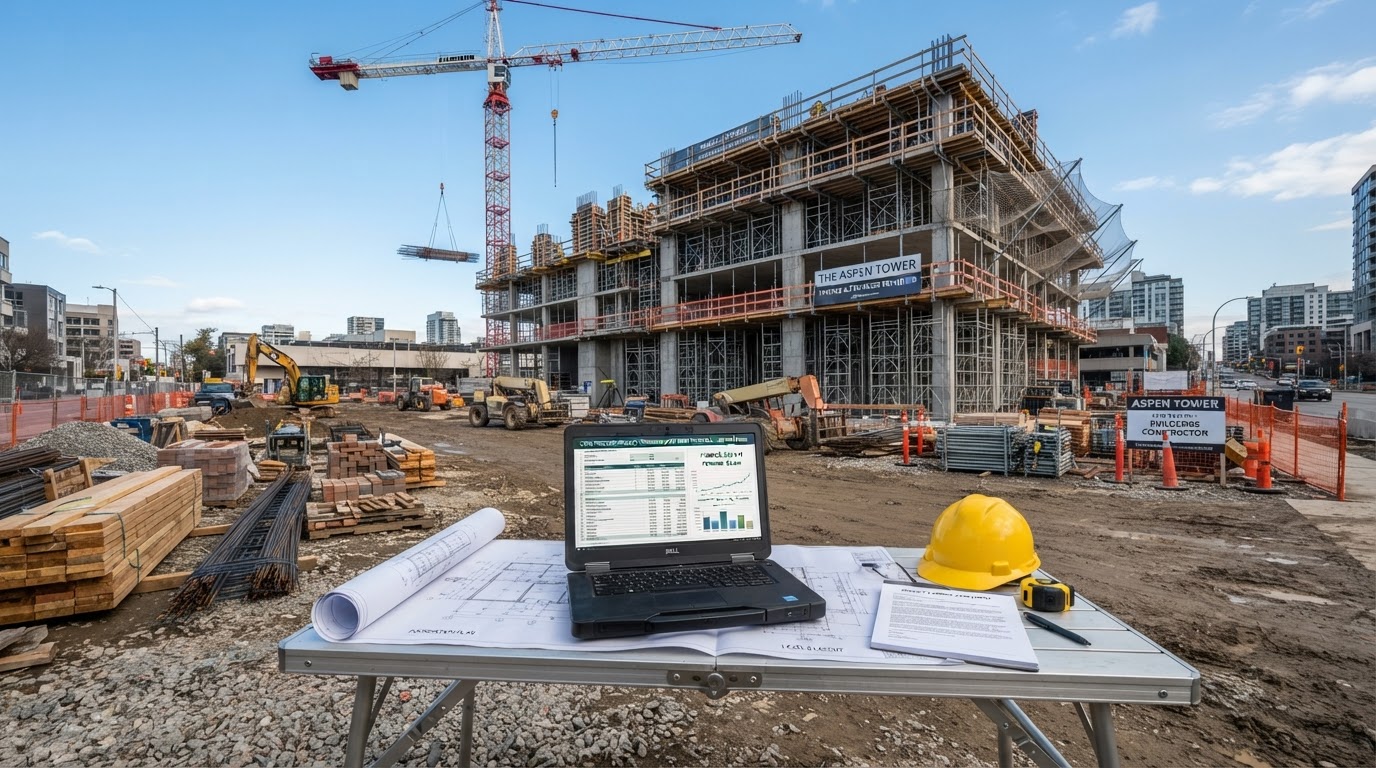
No industry Damon and Ashley Boswell work with lives more visibly by cash flow than construction. A contractor signs a contract, mobilizes a crew, orders materials, rents equipment, and pays labor — all before a single dollar of project revenue lands in the bank account. The payment, when it comes, arrives weeks or months later, tied to milestones, inspections, and the client's own payment cycle. That gap between spending and earning is the central financial reality of every construction business, and it is why construction financing is not a luxury for contractors. It is the tool that lets a builder take on the next project without waiting for the last one to pay out.
In this guide, Damon and Ashley Boswell break down exactly how construction and contractor financing works, how progress payments shape a project's cash flow, what funding tools fit each type of need, and how to build a capital structure that lets your contracting business grow without strangling its cash flow on every job.
The Core Challenge: Spending Before Earning
Construction is a prepaid business — the contractor pays for labor, materials, equipment, and overhead before the client pays for the completed work. As the federal acquisition framework outlines, progress payments are a form of contract financing used precisely because of this structure: a contractor incurs significant costs before delivery, and progress payments reimburse a percentage of those costs as work progresses rather than waiting until the project is complete. That same dynamic applies to private construction, where a contractor mobilizes a job, builds for weeks, and waits for the milestone payment that recognizes the progress made.
Ashley Boswell frames the reality for every contractor she speaks with: you fund the project before the project funds you. Materials must be purchased and delivered before the work begins. Crews must be paid weekly regardless of when the client pays. Equipment must be rented or fueled and maintained. Subcontractors must be compensated on their own schedules. Every one of those costs hits before the milestone payment arrives, and the larger the project, the larger the gap. Damon Boswell adds that the businesses that fail in construction rarely fail because they cannot build. They fail because they run out of cash on a project that has not yet paid out, which is why financing the gap is not a sign of weakness. It is how a healthy construction business grows.
How Progress Payments Work
Progress payments are the mechanism that releases funds to a contractor as a project advances, rather than in a single lump sum at completion. As the acquisition framework details, progress payments based on costs are made on the basis of costs incurred by the contractor as work progresses under the contract, and they typically reimburse a percentage of allowable costs — commonly eighty percent for larger businesses, with higher rates for small businesses under specific provisions. For private commercial construction, the structure is similar: the contract defines milestones — foundation poured, framing complete, systems installed — and the client pays a percentage of the contract value as each milestone is reached and approved.
Damon Boswell explains the practical effect: a contractor does not wait until the building is finished to get paid. They receive progress payments at defined stages, which smooths the cash flow across the project's life. But there is a catch — each progress payment is tied to a milestone that must be inspected, approved, and invoiced, and the client typically has a payment window — often thirty days — from the approval before the funds land. That means the contractor still funds the work between milestones, and the payment for a milestone completed on the first of the month may not arrive until the end of the month or the beginning of the next. Ashley Boswell adds that retainage compounds the gap — many contracts withhold a percentage of each payment, often five to ten percent, until the project is complete and accepted. That retained amount is the contractor's money, earned but held, and it is a common source of cash flow strain on multi-month projects.
Funding the Gap: The Right Tools
Several funding tools serve construction businesses, and Damon and Ashley Boswell match the tool to the need with a clear framework. A business line of credit is the ideal structure for an established contractor, because it sits available and cost-free until a cash gap appears, then deploys exactly the amount needed to cover materials, payroll, or subcontractors, with interest only on what is drawn. As the financing landscape shows, a line of credit gives a contractor the flexibility to draw ahead of a milestone and repay when the progress payment lands — the same facility handling project after project without reapplying.
Invoice financing and factoring serve a different but related need — unlocking the cash tied up in approved but unpaid invoices, including the progress payments themselves. As X-Caliber Capital notes, invoice financing fits contractors that need faster cash while waiting on payment, and it works best when the contractor has performed, submitted an invoice, and expects payment but cannot wait for the normal collection cycle. Damon Boswell adds that for contractors working with slow-paying commercial clients or government agencies, factoring the approved invoices can convert a sixty-day wait into immediate cash, which keeps the next project moving. For equipment-intensive contractors, equipment financing funds the machinery that generates the revenue — a skid steer, a truck, a crane — with the equipment serving as collateral and the term matched to the equipment's useful life. And for major growth — a new location, a fleet expansion, a large project that demands real capital — a term loan or an SBA-backed loan delivers the lump sum the business needs to take on the opportunity.
Materials and Suppliers: Funding the Front End
Materials are typically the largest upfront cost on a construction project, and they must be purchased and delivered before the work that uses them begins. A contractor ordering lumber, steel, concrete, or fixtures for a project must pay the supplier — often on terms that are shorter than the project's payment cycle — which creates a gap between when the materials are paid for and when the project revenue that covers them arrives. That gap is where many contractors strain their cash flow, and it is where a working capital loan or a line of credit earns its value.
Ashley Boswell's guidance is practical. A contractor who can draw on a line of credit to pay for materials, then repay when the milestone payment arrives, avoids tying up operating cash in a single project's front end. Damon Boswell adds that supplier terms can also help — negotiating thirty or sixty-day terms with a trusted supplier effectively gives the contractor short-term financing built into the supply chain, but those terms are only available to contractors with a track record and a strong supplier relationship. For contractors without established supplier credit, a working capital loan or a merchant cash advance funded against the business's deposit history can bridge the materials gap until the project's milestone payments begin to land.
Equipment: Owning vs. Renting vs. Financing
Equipment decisions shape a contractor's capital structure as much as any loan. A contractor can rent equipment per project, which minimizes upfront cost but accumulates expense over time. They can purchase equipment outright, which preserves cash but drains reserves. Or they can finance the equipment, which spreads the cost over the equipment's useful life while preserving cash for operations. As the broader equipment financing market shows, financing is often the most strategic choice, because the equipment generates the revenue that repays the loan, the equipment serves as collateral which lowers the rate, and the term can be matched to the equipment's expected life.
Damon Boswell's framework is direct. Rent equipment for short-term, specialized, or infrequent needs where ownership does not pay off. Finance equipment for the machines the business uses regularly — the truck, the trailer, the skid steer, the compressor — where the equipment's revenue justifies the payment and the term aligns with its useful life. Ashley Boswell adds that financing equipment also opens the Section 179 tax strategy, allowing the contractor to deduct the full purchase price in the year the equipment is placed in service, even when it is financed — a combination that Damon and Ashley Boswell cover in depth in their equipment financing guide. For a contractor, the equipment decision is not just about the machine. It is about the capital structure it creates and the cash flow it protects.
Managing Retainage and Final Payments
Retainage is the percentage of each progress payment that the client withholds until the project is complete and accepted, and it is one of the most common sources of cash flow strain in construction. As the acquisition framework notes, for construction contracts, if the contractor's performance is not satisfactory, the contracting officer may suspend or withhold up to ten percent of the progress payment until corrective action is implemented. In private construction, retainage of five to ten percent is standard, meaning a contractor who has completed ninety-five percent of a project may still be waiting for the final five percent that represents their profit margin.
Damon Boswell frames the challenge: retainage ties up capital that the contractor has earned but cannot access until the project is accepted, which strains cash flow on the final phase of a job and on the transition to the next one. Ashley Boswell adds that invoice financing can serve this need specifically — a contractor can factor the retained amount or the final invoice to access the cash before the client releases it, which keeps the business moving while the administrative closeout runs its course. The key is to plan for retainage in the project's cash flow forecast from the start, treating it as earned-but-deferred revenue rather than a surprise at the end of the job.
Qualification: What Lenders Review for Contractors
Qualification for construction financing depends on the contractor's revenue consistency, the strength of the contracts in progress, the business's credit, and its time in operation. Lenders review bank statements for consistent deposits, the backlog of signed contracts, the profit margins on recent projects, the business's credit profile, and the existing debt load. For a line of credit, the lender is underwriting the contractor's ability to manage the draw-and-repay cycle across projects. For a term loan or equipment financing, the lender is underwriting the specific asset or investment and the business's ability to service the debt from its revenue.
Damon Boswell's preparation guidance is consistent. Keep clean business bank statements showing consistent project deposits, maintain a current profit and loss statement that reflects recent project margins, document the signed contract backlog that represents future revenue, and keep the business and personal credit clean. Ashley Boswell adds that contractors have an advantage in qualification that many underestimate — signed contracts represent committed future revenue, which a lender can underwrite against in a way that an unpredictable business cannot. A contractor with a signed twelve-month contract backlog presents as a lower-risk borrower than a business with uncertain future revenue, and presenting that backlog well is part of accessing the best terms.
Building a Capital Structure That Scales
The strongest construction businesses do not rely on a single funding tool. Damon and Ashley Boswell help contractors build a layered capital structure that matches each tool to its purpose. A line of credit handles the day-to-day project gaps — materials, payroll, subcontractors — drawn and repaid as each project's milestones land. Equipment financing funds the machines that generate the revenue, with terms matched to the equipment's life and the Section 179 deduction captured. Invoice financing or factoring unlocks the cash tied up in approved but unpaid invoices, including the progress payments and the retainage. A term loan or SBA-backed loan funds major growth — a new location, a fleet expansion, a business acquisition — with a lump sum repaid over years.
Damon Boswell emphasizes that the structure must flex with the business. A contractor just starting out may rely on a merchant cash advance and equipment financing, because those products underwrite on deposit history and equipment value rather than a long credit profile. An established contractor with consistent revenue and strong credit can access a line of credit and an SBA loan, which are cheaper and more flexible. Ashley Boswell adds that the goal is not to minimize borrowing — it is to match each dollar of capital to the need it serves, so the business grows without the cash flow strain that undisciplined borrowing creates. Construction is a cash flow business, and the contractor who manages that cash flow with the right tools is the one who takes on the next project with confidence rather than hesitation.
Is Construction Financing Right for Your Business?
Damon Boswell's readiness test is direct. Does your business fund projects before the project pays — materials, labor, subcontractors, equipment — with a gap between spending and earning? Do you have signed contracts that represent committed future revenue but cash flow gaps between milestones? Are you carrying retainage that ties up earned revenue until project completion? Are you planning growth — equipment, a new location, a larger project — that demands capital beyond what your current cash flow can fund? If you can answer yes to these, construction financing is not a sign that your business is struggling. It is the tool that lets a healthy contracting business grow without waiting for every prior project to fully pay out before taking on the next one.
If you are unsure where your business stands, that is exactly what our AI Funding Match Calculator is built to clarify. The calculator weighs your revenue, credit, timeline, and goals, and Damon and Ashley Boswell review every result personally. On a short phone call — no Zoom required — we will help you determine which funding tools fit your contracting business, how to structure your capital around your project cycle, and how to fund the growth you are ready to take on.
The Bottom Line
Construction financing exists because contractors spend before they earn — funding materials, labor, and equipment on projects that pay out weeks or months later through progress payments and final invoices. The right funding tools bridge that gap at every stage: a line of credit for day-to-day project cash flow, equipment financing for the machines that generate the revenue, invoice financing for the cash tied up in unpaid progress payments and retainage, and term loans or SBA loans for the major growth that demands real capital. Damon and Ashley Boswell have helped contractors across the United States, Puerto Rico, and Canada build capital structures that scale with their businesses, and the contractors who succeed are the ones that treat financing as the tool that lets them take on the next project rather than the cost that holds them back from it.
See which funding fits your contracting business. Complete the AI Funding Match Calculator in under 60 seconds, and Damon and Ashley Boswell will walk through your project cycle, your cash flow, and your next step on a quick phone call — so your business funds the work it is ready to take on instead of waiting for the work it has already done.
Damon Boswell and Ashley Boswell
Funding specialists at ASAP Capital Solutions, helping business owners find the right capital across the United States, Puerto Rico, and Canada.
Find Your Funding Match in 60 Seconds
Complete the AI Funding Match Calculator and Damon and Ashley Boswell will review your matches on a quick phone call.
Get My Funding Match

