
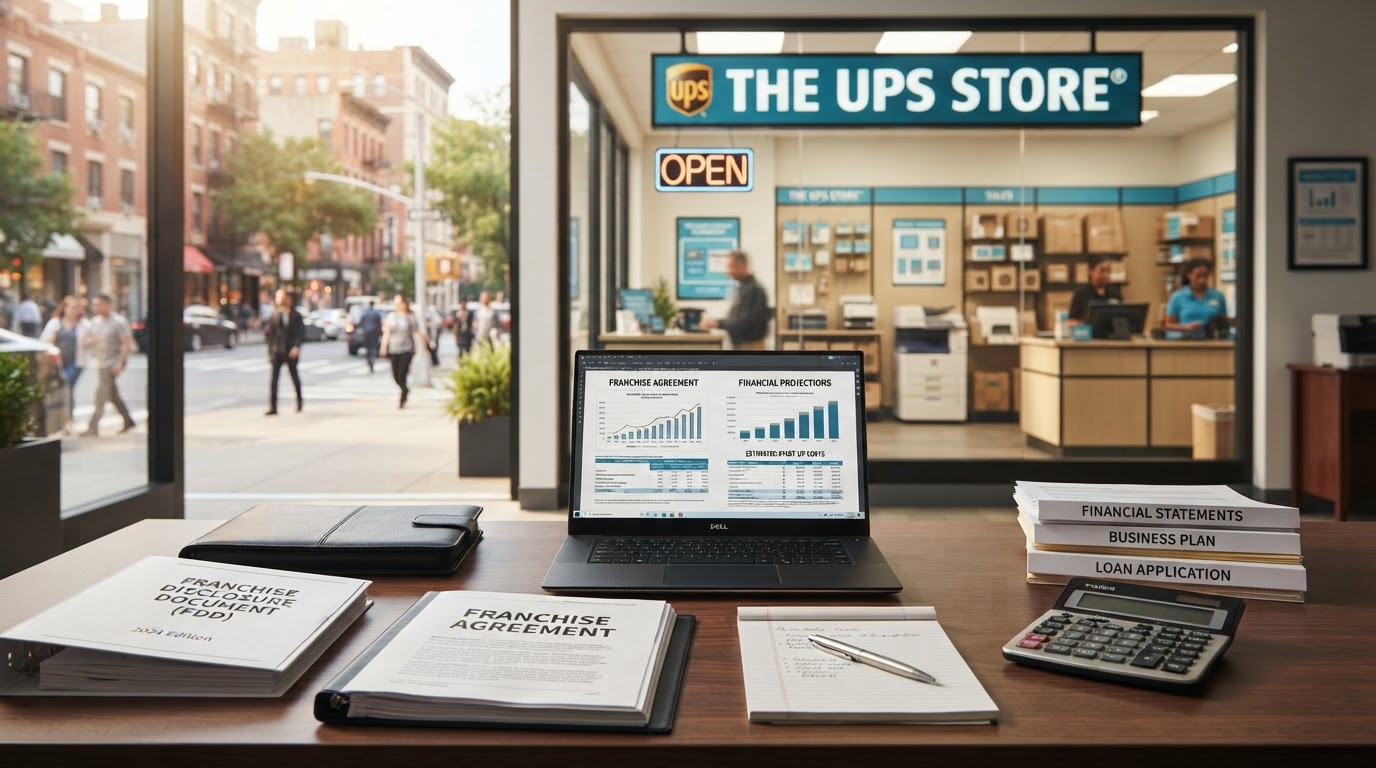
Buying a franchise offers something that starting a business from scratch cannot: a proven model, an established brand, training, and operational systems that have already been tested in the market. But that head start comes at a price, and the upfront cost of a franchise — the franchise fee, buildout, equipment, inventory, working capital, and real estate — can easily run into the hundreds of thousands of dollars. At ASAP Capital Solutions, Damon and Ashley Boswell guide prospective franchisees through the financing process regularly, and the structure of the deal matters as much as the franchise itself.
In this guide, Damon and Ashley Boswell break down the primary ways to finance the purchase and launch of a franchise in 2026, what each requires, how the costs compare, and how to choose the right combination for your situation.
Why Franchise Financing Is Different
Franchise financing occupies a unique space in business funding, and Damon and Ashley Boswell explain why. A franchise is neither a pure startup nor a pure acquisition of an existing independent business. It is a startup with a template — the franchisor provides the brand, the systems, and the playbook, but the franchisee still bears the cost of building the location, stocking it, and funding the early months before revenue stabilizes. Capital Bank notes that a franchise operates with a model that has already proven to be successful and comes with a corporate reputation to back up the investment, which is precisely what makes lenders more comfortable financing a franchise than an unproven independent startup.
Damon Boswell frames the advantage: lenders see a franchise as lower risk than a standalone startup because the model has a track record. That comfort translates into better terms, higher approval rates, and access to government-backed programs that might be out of reach for an independent launch. Ashley Boswell adds that the franchisor's existing relationship with lenders — many brands have preferred lending partners — can streamline the process significantly. But the franchisee still must qualify on their own credit, capital, and experience, and the total cost of launch must be funded somehow. That is where the financing structure comes in.
SBA 7(a) Loans: The Flagship Franchise Option
The SBA 7(a) loan program is the most widely used financing tool for franchise purchases, and Damon and Ashley Boswell point most prospective franchisees here first. LendingTree explains that the 7(a) loan program is the SBA's flagship product for general financing, and franchise owners can use it for purchasing real estate, fixed assets, working capital, and even refinancing existing debts, with amounts available up to $5 million. Capital Bank adds that 7(a) loans are typically best for business owners in the initial stages of starting, buying, or running a franchise with expenses ranging from $350,000 to $5 million.
Damon Boswell highlights the terms that make 7(a) loans attractive for franchisees: repayment periods up to 25 years, which preserve cash flow during the critical early months; fully amortizing structures with no balloon payments; minimal or no financial covenants; and no prepayment penalties on terms under 15 years. Ready Capital confirms that SBA 7(a) loans offer higher allowable leverage and wider parameters than a typical conventional loan, making them a strong fit for growing franchise portfolios. Ashley Boswell adds the rate structure: LendingTree notes that interest rates are based on the prime rate, with variable loans maxing out at 9.75% to 13.25% and fixed loans maxing out at 11.75% to 14.75% based on loan size. The government guarantee — up to 85% for loans of $150,000 or less and 75% for larger loans — is what enables the favorable terms and the lower down payment requirements that make franchise ownership accessible.
SBA 7(a) Small Loans and 504 Loans
Within the SBA ecosystem, two additional programs serve specific franchise needs. Capital Bank describes the SBA 7(a) Small Loan Program, which offers a streamlined application and approval process for loans up to $350,000 with a maximum repayment period of 10 years, best suited for franchise owners financing soft costs like inventory, supplies, and raw materials. For a franchisee whose total need is modest, the Small Loan's streamlined process can mean faster approval and less documentation than a full 7(a).
The SBA 504 Loan Program serves a different purpose. Capital Bank explains that 504 loans provide long-term fixed-asset financing up to $5.5 million with a 10 to 25 year repayment period, provided in conjunction with financial institutions and Certified Development Companies. Eligible projects include purchasing, constructing, or improving commercial real estate or long-term equipment. Damon Boswell notes that the 504 is the right tool when a franchisee is buying the real estate the franchise will occupy rather than leasing — a common strategy for franchisees who want to build equity in the property alongside the business. Ashley Boswell adds that the 504's fixed-rate structure is particularly valuable in a rising-rate environment, locking in long-term cost certainty on the real estate while a 7(a) handles the working capital and soft costs.
Franchisor Financing and Preferred Lenders
Many franchisors offer their own financing or maintain relationships with preferred lenders, and Damon and Ashley Boswell encourage every prospective franchisee to explore this option. LendingTree notes that some franchisors offer in-house financing, with details typically found in Item 10 of the franchise disclosure document. Similar to traditional lenders, the franchisor will review eligibility factors such as credit score, net worth, and available liquid capital. If the franchisor does not offer direct financing, they may have preferred lending partners — relationships that can streamline approval because the lender already understands the franchise model and its economics.
Ashley Boswell describes the advantage of franchisor-aligned financing: the lender already knows the brand, the typical performance of its locations, and the standard buildout costs, which reduces underwriting friction. Damon Boswell adds the caution: while franchisor financing or preferred lenders can be convenient, it is still worth shopping around with independent lenders for the best terms and rates. A franchisor's preferred partner is not obligated to offer the most competitive deal, and a franchisee who compares offers from multiple sources — including SBA-approved lenders found through the SBA's Lender Match tool — may find better terms elsewhere. Convenience is valuable, but it should not come at the cost of a meaningfully higher rate or less favorable structure.
Conventional Term Loans and Equipment Financing
Beyond SBA loans and franchisor options, conventional term loans from banks, credit unions, and online lenders remain a viable path for franchise financing. Ready Capital lists the franchise loan purposes that conventional and SBA loans alike can cover: startups, working capital, equipment, and commercial real estate purchase. For a franchisee with strong credit and sufficient collateral, a conventional term loan may close faster than an SBA loan, which can take weeks to process, though typically at a higher rate and with a larger down payment requirement.
Damon Boswell adds that equipment financing deserves specific attention in a franchise context. Many franchises require significant equipment — restaurant kitchens, dental chairs, vehicle fleets, fitness machinery — and because the equipment itself serves as collateral, equipment financing can be accessible even when a broader term loan is not. Ashley Boswell notes that franchisees often layer equipment financing alongside an SBA 7(a) loan: the 7(a) covers the franchise fee, buildout, and working capital, while a separate equipment loan funds the specific machinery at terms calibrated to that asset's useful life. This layered structure is one of the most common ways franchise launches are actually funded.
What Franchise Financing Can Cover
Understanding what the funds can be used for is essential to sizing the request correctly. Capital Bank outlines the eligible uses of SBA franchise loans: starting or buying an existing franchise, paying franchise or royalty fees, opening new locations or covering marketing expenses, resolving cash flow issues, paying or training employees, and making leasehold improvements. Ready Capital adds startup costs, business acquisitions and expansions, renovations and rebranding, and the purchase of existing franchise locations to the list.
Damon and Ashley Boswell walk every prospective franchisee through a total-cost model before any application. The franchise fee itself is only the beginning. The full launch cost includes the buildout and leasehold improvements to prepare the location, equipment and fixtures, initial inventory, training costs often required by the franchisor, working capital to cover operating expenses during the months before revenue stabilizes, and the real estate if the franchisee is purchasing rather than leasing. Damon Boswell stresses that underfunding working capital is the most common and most dangerous mistake — a franchisee who funds the buildout but not the operating runway runs out of cash before the location reaches break-even. The financing must cover not just opening the doors but sustaining the business until those doors generate enough revenue to stand on their own.
The Down Payment and Equity Requirement
The down payment is a central consideration in franchise financing, and Damon and Ashley Boswell set expectations clearly. LendingTree notes that some SBA lenders may require a 10% to 30% down payment, depending on whether the franchisee is purchasing an existing franchise unit or opening a new location. For a $500,000 franchise launch, that means $50,000 to $150,000 in cash from the franchisee before any lender finances the remainder.
Damon Boswell's guidance is to determine available liquid capital first, then size the franchise investment to fit. A franchisee with $75,000 in liquid funds should be looking at total launch costs in the $250,000 to $500,000 range, not a $1.5 million buildout that requires a down payment they cannot make. Ashley Boswell adds that the franchisor's own liquid capital requirement — typically specified in the franchise disclosure document — sets a floor on what the franchisee must have available, and lenders will want to see that the franchisee meets or exceeds it. The down payment is not just a lender requirement; it is the franchisee's skin in the game, demonstrating to both the lender and the franchisor that the franchisee has the personal financial foundation to sustain the business through its early months.
SBA Franchise Eligibility and the Franchise Directory
Not every franchise qualifies for SBA financing, and Damon and Ashley Boswell emphasize the importance of confirming eligibility early. LendingTree explains that the SBA maintains a list of franchises that are eligible for financial assistance, and if the brand a prospective franchisee is interested in is not listed in the directory, they should ask the franchisor whether they have plans to be listed soon. The SBA's eligibility framework requires that the franchisee be a for-profit business operating in an eligible industry that meets the SBA's size standards.
Ashley Boswell's guidance is to verify SBA eligibility before falling in love with a brand. A franchise that is not SBA-eligible narrows the financing options to conventional loans, franchisor financing, and equipment financing — all of which typically require stronger credit, more collateral, or larger down payments than an SBA loan would. Damon Boswell adds that the franchise disclosure document, which the franchisor is legally required to provide, contains critical information about the brand's financing relationships, the franchisor's financial health, and any restrictions on how the franchise can be financed or transferred. Reviewing that document with both a franchise attorney and a funding specialist is not optional — it is due diligence that protects the franchisee's investment before a single dollar changes hands.
Structuring the Deal: Combining Methods
As with any acquisition, most franchise launches are not funded by a single source. Damon and Ashley Boswell help franchisees combine methods deliberately. A typical structure might involve a 15% to 20% down payment from the franchisee's personal funds, an SBA 7(a) loan covering the franchise fee, buildout, and working capital, a separate equipment financing loan for the specific machinery, and occasionally seller financing if the franchisee is purchasing an existing location from a current owner rather than opening a new one.
Damon Boswell's structuring principle is to match each funding layer to the asset it finances. The franchise fee and working capital belong in a 7(a) loan with its long term and low rate. Equipment belongs in an equipment loan calibrated to the asset's life. Real estate, if purchased, may belong in a 504 loan with its fixed rate. Ashley Boswell adds that the total debt service across all layers must be sustainable against the franchise's projected revenue — and the franchisor's own performance data, available in the franchise disclosure document, provides a realistic basis for that projection rather than optimism. Lenders will scrutinize the debt-service coverage ratio, and so should the franchisee before signing.
Is Franchise Financing Right for You?
Damon Boswell's readiness test for prospective franchisees is direct: Do you have 10% to 30% of the total launch cost available in liquid capital? Is the franchise you are considering SBA-eligible, or do you have a financing path that works without SBA backing? Have you reviewed the franchise disclosure document with an attorney and confirmed the brand's financial health and performance history? Does the franchisor's performance data support a revenue projection that comfortably covers your total debt service? And have you structured the financing to cover not just the buildout but the working capital runway needed to reach break-even? If you can answer yes to these, franchise financing is a realistic path. If the down payment or the franchise's financials are weak, those are the gaps to close before pursuing a purchase.
If you are unsure where you stand, that is exactly what our AI Funding Match Calculator is built to clarify. The calculator weighs your revenue, credit, timeline, and goals, and Damon and Ashley Boswell review every result personally. On a short phone call — no Zoom required — we will help you assess your franchise financing readiness, identify the right structure, and determine whether the franchise in front of you is one worth funding.
The Bottom Line
Buying a franchise offers a proven model and an established brand, but it demands significant capital and careful structuring. The franchisees who succeed are the ones who understand the full range of financing options — SBA 7(a) and 504 loans, franchisor financing and preferred lenders, conventional term loans, and equipment financing — and who combine them deliberately into a structure that covers the franchise fee, the buildout, the equipment, and the working capital runway all at once. Damon and Ashley Boswell have helped prospective franchisees across the United States, Puerto Rico, and Canada fund their launches, and the franchises that succeed are the ones where the financing is engineered as carefully as the location selection itself.
See whether franchise financing fits your situation. Complete the AI Funding Match Calculator in under 60 seconds, and Damon and Ashley Boswell will walk through your readiness, your structure, and your next step on a quick phone call — so when the right franchise opportunity appears, you are ready to fund it.
Damon Boswell and Ashley Boswell
Funding specialists at ASAP Capital Solutions, helping business owners find the right capital across the United States, Puerto Rico, and Canada.
Find Your Funding Match in 60 Seconds
Complete the AI Funding Match Calculator and Damon and Ashley Boswell will review your matches on a quick phone call.
Get My Funding Match

