
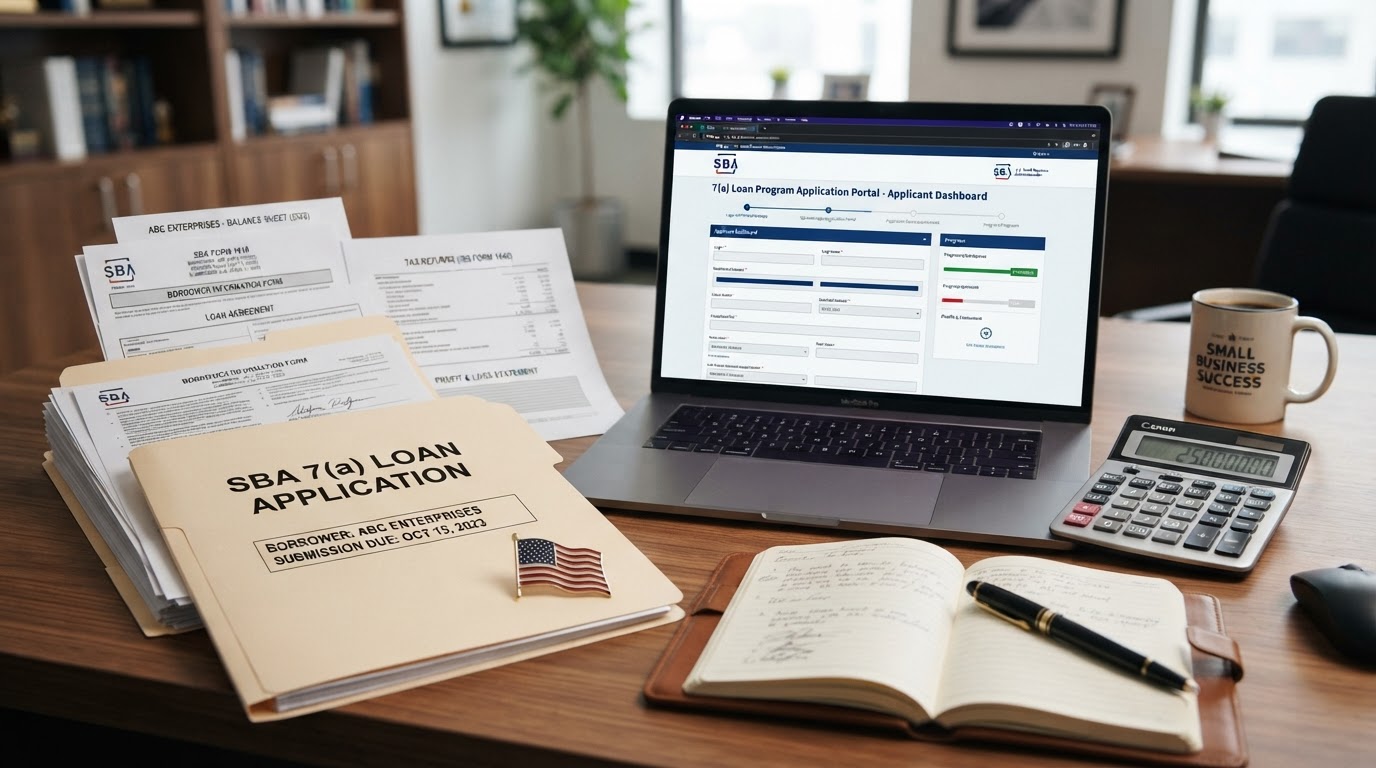
Among every funding product Damon and Ashley Boswell discuss with business owners, few carry as much prestige — and as much confusion — as the SBA 7(a) loan. It is the flagship loan program of the U.S. Small Business Administration, the most widely used government-backed business loan in the country, and for businesses that qualify, often the lowest-cost, longest-term capital available anywhere. Yet the confusion around it is real: many owners assume the SBA lends the money directly, that the process takes a year, or that only certain businesses qualify. None of those assumptions is accurate, and the misconceptions keep owners from pursuing a program that could be the best funding they ever access.
In this guide, Damon and Ashley Boswell break down exactly what an SBA 7(a) loan is, how the program works, who qualifies, what the funds can be used for, what the terms look like, and how to navigate the application process in 2026.
What an SBA 7(a) Loan Actually Is
An SBA 7(a) loan is not a loan from the government. It is a loan from a private lender — a bank, credit union, or specialized lending partner — that the SBA guarantees. As the SBA itself explains, the agency guarantees that loans issued by its lending partners will be repaid, which offers benefits to lenders that standard loans do not. That guarantee, typically covering up to 85% of the loan amount, reduces the lender's risk, which is what enables the favorable terms — lower down payments, longer repayment periods, and competitive interest rates — that make 7(a) loans so attractive.
Ashley Boswell translates the concept plainly: the SBA does not hand you the money. A lender does, and the SBA promises the lender that if you default, the government will cover a large portion of the loss. That promise is what makes the lender willing to offer terms they would never offer on an unguaranteed loan. Damon Boswell adds that this structure is why 7(a) loans are accessible to businesses that might not qualify for conventional bank loans — the guarantee lowers the lender's risk enough to approve borrowers who would otherwise be declined.
Loan Amounts, Terms, and Rates
The 7(a) program is substantial in scale. As the SBA outlines, 7(a) loans are available up to $5 million, with maturity of 10 years or less for most purposes, and up to 25 years for real estate. The interest rate is negotiated between the borrower and lender, subject to SBA maximums, which keeps rates competitive and typically well below what alternative lenders charge. The combination of a large maximum amount, a long term, and a government-capped rate is what makes the 7(a) the gold standard for many business funding needs.
Damon Boswell frames the value: a $500,000 7(a) loan for real estate can extend over 25 years, producing a monthly payment that a shorter commercial loan could not match. That long amortization is what makes major investments — purchasing a building, acquiring a business, refinancing high-cost debt — affordable on a monthly basis. Ashley Boswell adds that the rate structure, while not the absolute lowest in the market, is consistently competitive and far below the effective rates of short-term alternative products. For a business that qualifies, the 7(a) is almost always the lowest-cost, longest-term option available.
What 7(a) Funds Can Be Used For
The permitted uses of 7(a) proceeds are broad, which is part of the program's appeal. As the SBA details, 7(a) funds can be used to acquire land and build or renovate a building, purchase machinery, equipment, supplies, furniture and fixtures, make leasehold improvements, expand or renovate facilities, purchase permanent working capital and inventory, acquire a business or partial ownership, start a business, and refinance certain existing debt. That breadth means a single 7(a) loan can address multiple needs simultaneously — a business acquisition that also funds working capital and equipment, for example.
Damon and Ashley Boswell note that the refinancing use is particularly valuable. A business carrying high-cost short-term debt — merchant cash advances, high-rate term loans — may be able to refinance that debt into a 7(a) loan at a far lower rate and longer term, dramatically reducing monthly payments and total cost. Ashley Boswell adds that the working capital use makes 7(a) appropriate for growth initiatives, not just asset purchases, which distinguishes it from equipment-specific or real-estate-specific products. Damon Boswell cautions that the SBA does restrict certain uses — the funds cannot be used to repay certain delinquent taxes, for speculative investments, or for businesses in certain ineligible industries — so confirming the use of proceeds qualifies is an early step in the process.
Who Qualifies: The Eligibility Requirements
The SBA's eligibility requirements are specific but not as restrictive as many owners assume. As the SBA outlines, to be eligible for 7(a) assistance, a business must be an operating business, operate for profit, be located in the United States, be small under SBA size requirements, not be a type of ineligible business, not be able to obtain the desired credit on reasonable terms from non-government sources, and be creditworthy with a reasonable ability to repay the loan. The SBA also notes that even those with bad credit may qualify for startup funding — the program is not limited to businesses with perfect credit.
Damon Boswell walks owners through what these requirements mean in practice. The business must be operational and for-profit, which excludes pure speculative ventures. The size standard varies by industry but covers the vast majority of businesses most people would consider small. The credit elsewhere requirement means the SBA wants to confirm the business cannot get equivalent terms from a conventional lender — which is often true for businesses that are growing, have some credit imperfections, or lack substantial collateral. Ashley Boswell adds that the creditworthiness requirement is real but flexible — the SBA and its lenders look at the whole picture, including character, capacity to repay, and collateral, rather than a single credit score.
The Variations Within the 7(a) Program
The 7(a) program is not a single product — it includes several variations tailored to different needs. The Standard 7(a) covers the full range of uses up to the $5 million maximum. The 7(a) Small Loan, capped at $350,000, offers a streamlined process for smaller needs. The SBA also offers a Working Capital Pilot program, designed for revolving working capital lines, which requires a business to have at least 12 months of operating history and the ability to produce timely financial statements.
Damon Boswell explains that the variation matters for the application process. Smaller loans under the 7(a) Small or SBA Express programs can be approved more quickly with less documentation, while larger standard 7(a) loans require fuller underwriting. Ashley Boswell adds that the Working Capital Pilot is particularly relevant for businesses that need revolving access rather than a lump sum — it functions more like a line of credit backed by the SBA guarantee, which is a powerful option for businesses with ongoing working capital needs.
The Application Process and Documents
The 7(a) application is more documentation-heavy than most alternative products, and Damon and Ashley Boswell set expectations clearly. The SBA notes that the lender will help determine which documents are needed based on individual circumstances, but the core requirements typically include personal and business tax returns for the past two to three years, a current profit and loss statement, balance sheet, business debt schedule, personal financial statement, business plan or loan proposal, and documentation of the intended use of proceeds.
Ashley Boswell's preparation checklist is comprehensive: gather three years of business and personal tax returns, a current P&L and balance sheet, a debt schedule listing all existing obligations, a clear statement of how the funds will be used and how they will be repaid, and any collateral documentation if the loan is secured. Damon Boswell adds that the process takes longer than alternative funding — often several weeks to a few months — because the documentation is fuller and the underwriting is more thorough. The trade-off is that the terms are dramatically better, so the patience is almost always worth it for businesses that can wait.
Collateral and Personal Guarantees
Collateral and personal guarantees are part of most 7(a) loans, and Damon and Ashley Boswell are direct about this. The SBA notes that for loans of $50,000 or less, no collateral is required, and for loans between $50,001 and $500,000, the lender follows its own collateral policies and a loan cannot be declined solely for inadequate collateral. For larger loans, collateral is typically required, and a personal guarantee from any owner with 20% or more ownership is standard.
Damon Boswell frames the trade-off honestly: the 7(a)'s favorable terms come with the commitment of collateral and a personal guarantee, which means the owner is personally on the hook if the business defaults. That is not unique to the SBA — most commercial loans require similar guarantees — but it is a real responsibility. Ashley Boswell adds that the collateral requirement is often flexible for smaller loans, and that the SBA's structure is designed to make approval possible even when collateral is limited, which is part of the program's mission to expand access to capital.
7(a) vs. Alternative Funding: When Each Wins
The 7(a) is not the right product for every situation, and Damon and Ashley Boswell help owners weigh it against alternatives constantly. The 7(a) wins when the business qualifies, the need is substantial and longer-term, and the owner can wait for the longer approval process to capture the lower rate and longer term. It is the product for major investments — real estate, business acquisition, large equipment, debt refinancing — where the long amortization and low rate deliver meaningful savings.
Alternative funding — merchant cash advances, short-term loans, lines of credit — wins when speed matters more than cost, when the need is short-term, or when the business cannot yet qualify for a 7(a). Damon Boswell notes that many businesses use alternative products to bridge immediate needs while building toward 7(a) qualification, then refinance into a 7(a) once their credit, revenue, and time in business meet the standard. Ashley Boswell adds that the two categories are not competitors — they are tools for different situations, and the strongest businesses use each where it fits rather than forcing one product to do a job it was not built for.
Is an SBA 7(a) Loan Right for You?
Damon Boswell's readiness test is direct: Is your business operating, for-profit, U.S.-based, and small under SBA size standards? Is your need substantial and longer-term — real estate, acquisition, major equipment, working capital, or debt refinancing? Can you produce the documentation the application requires — tax returns, financials, debt schedule, use of proceeds? Can you wait several weeks to a few months for approval and funding? And are you comfortable with the collateral and personal guarantee the loan requires? If you can answer yes to these, the 7(a) is likely the lowest-cost, longest-term funding available to your business, and it deserves serious pursuit.
If you are unsure where your business stands, that is exactly what our AI Funding Match Calculator is built to clarify. The calculator weighs your revenue, credit, timeline, and goals, and Damon and Ashley Boswell review every result personally. On a short phone call — no Zoom required — we will help you assess whether a 7(a) loan fits your need, whether your business qualifies, and what the application process would look like for your specific situation.
The Bottom Line
The SBA 7(a) loan is the most popular government-backed business loan for a reason — it offers larger amounts, longer terms, and competitive rates that few other products can match, backed by a government guarantee that makes approval possible for businesses that conventional lenders might decline. The trade-off is a documentation-heavy application and a longer timeline, but for businesses that qualify and can wait, the savings and structure are substantial. Damon and Ashley Boswell have helped owners across the United States and its territories pursue 7(a) financing, and the businesses that succeed are the ones that understand the program, prepare the documentation, and align the loan with a substantial, long-term purpose.
See whether an SBA 7(a) loan fits your business. Complete the AI Funding Match Calculator in under 60 seconds, and Damon and Ashley Boswell will walk through your eligibility, your use of proceeds, and your next step on a quick phone call — so you can pursue the best terms available for your business.
Damon Boswell and Ashley Boswell
Funding specialists at ASAP Capital Solutions, helping business owners find the right capital across the United States, Puerto Rico, and Canada.
Find Your Funding Match in 60 Seconds
Complete the AI Funding Match Calculator and Damon and Ashley Boswell will review your matches on a quick phone call.
Get My Funding Match

