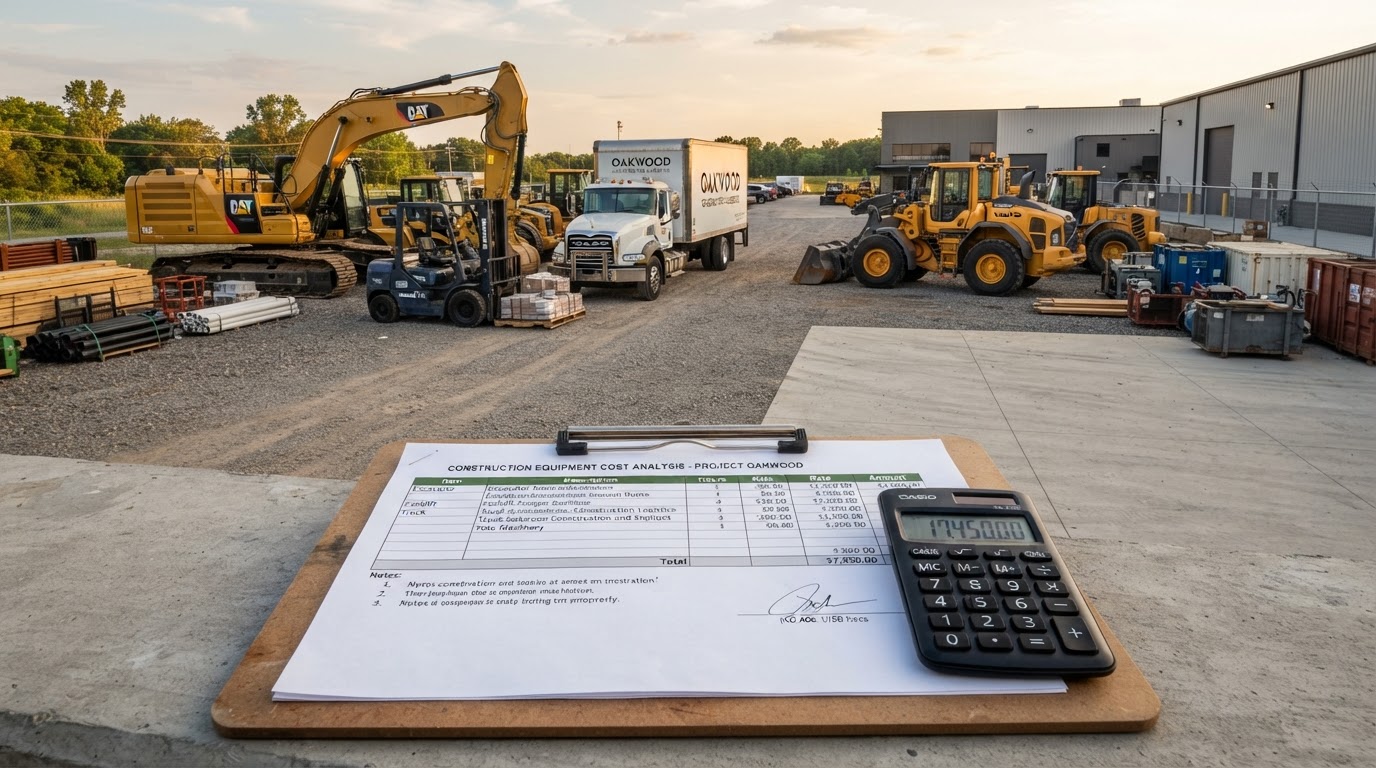
Most businesses need equipment to operate, but few have the cash on hand to buy it outright without disrupting everything else. Whether it is a delivery truck for a logistics company, a commercial oven for a restaurant, an MRI machine for a medical practice, or a press for a manufacturer, the cost of essential equipment can easily run into the tens or hundreds of thousands of dollars. At ASAP Capital Solutions, Ashley and Damon Boswell help owners understand how equipment financing turns that obstacle into a manageable monthly payment — and why it is often more accessible than owners expect.
In this guide, Ashley and Damon Boswell break down what equipment financing is, how it works, what you can finance, and how to decide whether it is the right path for your next acquisition.
What Is Equipment Financing?
Equipment financing is a funding structure that allows businesses to acquire equipment — new or used — by making fixed monthly payments over a set term rather than paying the full cost upfront. As Dimension Funding explains, the equipment itself typically serves as collateral, which makes it easier to qualify for than an unsecured business loan. Bluevine adds that equipment financing helps businesses purchase or lease assets such as vehicles, machinery, computers, restaurant equipment, and other tools needed to operate, with the equipment itself serving as collateral for the loan.
Ashley Boswell describes the core advantage simply: because the asset being purchased secures the financing, the lender has a tangible guarantee behind the loan, which reduces their risk and opens the door for businesses that might not qualify for a large unsecured amount. Damon Boswell adds that this is what makes equipment financing distinct from a general working capital loan — the financing is tied directly to the asset, and the underwriting weighs the value and useful life of that asset alongside the business's financials.
What Equipment Can You Finance?
The range is broader than most owners expect. Dimension Funding finances virtually all types of commercial equipment — construction machinery, medical devices, restaurant equipment, IT hardware, brewery equipment, lab equipment, material handling machinery, trucks, and more. Both new and used equipment are eligible, and financing can cover 100% of associated costs including shipping, installation, labor, and maintenance, so there are no surprise expenses outside the fixed monthly payment.
Damon Boswell walks owners through the possibilities on every call: commercial real estate is one thing, but heavy equipment, vehicles, kitchen equipment, medical technology, and even business software can all be financed. Dimension Funding notes that software and technology can be financed too — including ERP systems, CRM platforms, accounting software, and medical EMR systems — with implementation costs, training, and hardware bundled into a single monthly payment with terms up to 60 months. Ashley Boswell adds that many owners do not realize their software and technology investments qualify, which can free up cash that would otherwise be tied up in a large upfront purchase.
How the Process Works
Bluevine outlines the process in clear steps. With an equipment loan, your business identifies the equipment it wants to purchase and provides the lender with information such as a quote, invoice, or purchase agreement. The lender then evaluates both the business and the asset before determining whether to approve the financing and on what terms. Lenders consider factors such as the equipment's age, condition, expected useful life, and potential resale value alongside the business's credit, revenue, and time in operation.
Ashley and Damon Boswell tell owners that the process is typically faster and lighter on documentation than a traditional bank loan. Dimension Funding notes that for application-only financing, no financial statements are required up to $250,000 for equipment and up to $500,000 when software is included — above that threshold, financial statements are required, though the process remains streamlined. Damon Boswell adds that the speed is a major advantage: Bay Street Lending reports funding in as little as three days, with rates ranging from 6 to 22% APR and terms of 2 to 7 years.
Who Qualifies?
Because the equipment secures the loan, qualification is more accessible than unsecured lending. Bay Street Lending notes that most lenders approve at 600-plus FICO with one-plus year in business, and specialty lenders go as low as 575 FICO on assets with a clear resale market. Standard baseline requirements include one-plus year in business, $15,000-plus in monthly revenue, a vendor quote, and equipment with enough remaining useful life to support the requested term. NerdWallet adds that some lenders allow qualification with as little as 24 months in business, with approval in as little as 24 hours and funding as soon as the next business day.
Ashley Boswell stresses that a newer business is not automatically disqualified. While at least two years in business is preferred, businesses with strong personal or business credit may still qualify, and working with most credit types — from Tier A to marginal credit — is common among specialty lenders. Damon Boswell's advice: if you need equipment and have been assuming your credit or time in business disqualifies you, it is always worth submitting an application to find out what options are available. The asset itself does much of the qualifying work.
The Tax Advantage
One of the most compelling reasons to finance equipment in 2026 is the tax benefit. Dimension Funding highlights that under IRS Section 179, businesses can deduct up to $2,500,000 of qualifying equipment purchases in the year they are made, with a spending cap of $4,000,000 before the deduction begins to phase out. This means a business that finances equipment can often deduct the full purchase price in the same year, even though the cost is spread across monthly payments over a longer term.
Damon Boswell is careful to note that tax strategy should always be confirmed with a qualified CPA, but the principle is powerful: financing lets you preserve cash flow through manageable monthly payments while potentially capturing a significant upfront deduction. Ashley Boswell adds that this combination — preserving capital, acquiring an essential asset, and capturing a tax benefit in the same year — is what makes equipment financing one of the most efficient funding tools available for asset-rich needs.
Equipment Financing vs. Other Funding Options
Bluevine lays out the comparison clearly. An equipment loan is financing tied to a specific asset, commonly secured by that equipment — ideal for a defined purchase you plan to keep or use long-term. An equipment lease lets a business pay for the use of equipment over a set period, fitting assets that need regular upgrades or replacement. A term loan provides lump-sum financing with scheduled repayment for large, one-time purchases. A line of credit offers revolving access for equipment plus other variable expenses. SBA financing serves eligible longer-term equipment or fixed-asset investments.
Ashley and Damon Boswell rarely recommend a general working capital loan for an equipment purchase, because the equipment itself can secure better terms than an unsecured advance would offer. Damon Boswell's rule: if the need is a specific piece of equipment, finance it with a product built for that purpose — the collateral structure will almost always deliver better terms than a generic loan. If the need is broader — equipment plus payroll plus inventory — a line of credit or a combination of tools may serve better.
Is Equipment Financing Right for You?
If your business needs a specific piece of equipment — new or used, physical or software — and you want to acquire it without draining your working capital, equipment financing is almost always worth exploring. The asset secures the loan, the terms are often better than unsecured alternatives, the process is faster than a bank loan, and the tax benefits can be significant. Damon Boswell's checklist: do you have a specific asset in mind, does it have enough remaining useful life to support the term, and will the equipment generate enough productivity or revenue to cover its monthly payment? If the answers are yes, equipment financing deserves a serious look.
If you are unsure where your business stands, that is exactly what our AI Funding Match Calculator is built to clarify. The calculator weighs your revenue, credit, timeline, and goals, and Ashley and Damon Boswell review every result personally. On a short phone call — no Zoom required — we will help you determine whether equipment financing or another path is the right fit for your next acquisition.
The Bottom Line
Equipment financing is one of the most practical and accessible tools in business funding, because it lets the asset you need do the work of qualifying for the loan that buys it. It preserves working capital, delivers better terms than unsecured alternatives, funds faster than a bank loan, and can carry meaningful tax advantages. Ashley and Damon Boswell have helped owners across the United States, Puerto Rico, and Canada acquire the trucks, machinery, technology, and tools their businesses need to grow, and the businesses that succeed are the ones that match the financing to the specific asset rather than defaulting to whatever product is easiest to pitch.
See whether equipment financing fits your next acquisition. Complete the AI Funding Match Calculator in under 60 seconds, and Ashley and Damon Boswell will walk through your matches and your options on a quick phone call — so you put the tools you need to work without draining the cash you need to keep.


Ashley Boswell and Damon Boswell
Funding specialists at ASAP Capital Solutions, helping business owners find the right capital across the United States, Puerto Rico, and Canada.
Find Your Funding Match in 60 Seconds
Complete the AI Funding Match Calculator and Ashley and Damon Boswell will review your matches on a quick phone call.
Get My Funding Match